From Zero to Professional: A Website Guide for Small Businesses
Planning, costs, technical steps, legal requirements, and a practical conversion-oriented roadmap.
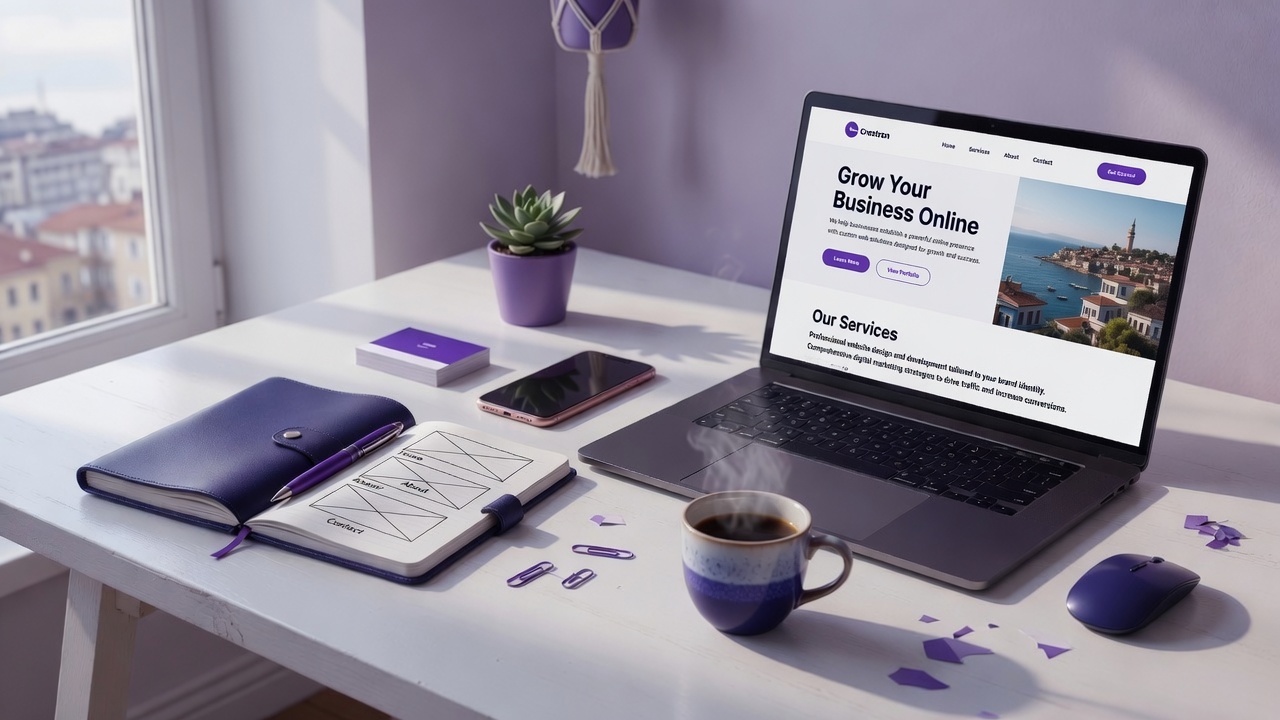
Having a digital presence is no longer a luxury — it is a necessity. For small businesses especially, a professional website is one of the strongest tools for trust, customer acquisition, brand perception, and competitive advantage. Still, many owners ask: “Where do I start?”, “What budget do I need?”, “I am not technical — can I still do this?”
This guide gives small-business owners a realistic, step-by-step roadmap to launch a professional website from scratch. It covers options for beginners and intermediate users, costs, pitfalls, and legal requirements in Turkey.
Define goals, audience, and budget before choosing a platform.
WordPress, Wix, Ikas/Shopify, or an agency — match the tool to the job.
Publish privacy, cookie, and disclosure texts before go-live.
SEO, speed, mobile UX, and Google Business Profile for durable traffic.
1. Why Small Businesses Need a Website
Social media matters, but your website is your digital identity card. People searching on Google often check your site before your social profiles. A professional site:
- Builds trust (especially for service and product businesses)
- Acts as a 24/7 storefront
- Attracts organic traffic through SEO
- Simplifies contact, booking, and order flows
- Helps you stand out from competitors
Most consumers look at a website before engaging a business. For local companies, the combination of a Google Business Profile + website is especially powerful.
2. Preparation: Do Not Start Without a Plan
Answer these questions clearly before you build:
What is your goal?
Brochure site only (about, services, contact), or online sales? Do you need booking, quote forms, a blog, or a portfolio?
Who is your audience?
Age, location, needs, and digital habits shape language, design, and content tone.
What is your budget range?
- Very low (0–5,000 TRY/year): No-code tools + free/cheap hosting
- Mid range (5,000–25,000 TRY): WordPress + solid theme + some design help
- Higher budget: Custom design + agency support + advanced features
Domain and brand fit
Choose a short, memorable domain aligned with your business name — ideally .com.tr or .com. In Turkey, .com.tr applications go through nic.tr (trade name or trademark documents may be required). Alternatives like .com or .online are also fine when needed.
3. Platform Choice: Realistic Options for Small Businesses in Turkey
Platform preference in Turkey follows local dynamics. International tools are common, but domestic ecommerce platforms and agency-built sites are widely used too. Realistic options as of 2026:
| Platform | Best for | Pros | Cons | Est. annual cost |
|---|---|---|---|---|
| WordPress | Flexibility and long-term control | Very common in TR, strong SEO, huge theme/plugin ecosystem | You manage hosting, security, and updates | 1,500 – 12,000+ TRY |
| Wix | Fast brochure sites | Easy drag-and-drop, rich templates, Turkish support | Limited deep customization; mid-level SEO | 2,500 – 7,000 TRY |
| Ikas / Shopify | Online sales | Ikas is TR-focused (iyzico, marketplace integrations); Shopify is global | Monthly fees + transaction costs | 4,000 – 18,000+ TRY |
| Canva Website | Simple one-pagers / quick starts | Free entry, easy design, mobile-friendly | Limited features for a full professional site | 0 – 2,500 TRY |
| Professional agency (Mandalium) | Owners who want quality without DIY | End-to-end design, build, SEO, and support | More coordination and project process than pure self-service | Project-based (scoped after discovery) |
Quick recommendations
- Low technical skill, need something live in days → Wix or Canva.
- Long-term control, blog, and SEO → WordPress with a solid Turkish host.
- Ecommerce → Ikas for local focus; Shopify for international scale. T-Soft, Ideasoft, and Ticimax remain popular domestic alternatives.
- You want professional, conversion-focused delivery without the technical work → work directly with us at Mandalium.
A note from us: From our base in Manisa, we handle web design, SEO, mobile apps, and custom software end to end. We meet in person across the Aegean and work remotely nationwide. The first discovery call is free — we can clarify budget, timeline, and platform choice together.
Many small businesses start on Wix or Canva, then migrate to WordPress or a custom agency build as they grow. That path is completely healthy.
4. Step-by-Step Setup
Get domain and hosting
Buying both from the same provider simplifies management. Enable SSL (HTTPS). Popular choices in Turkey include Hostinger, Turhost, Natro, and Radore.
Install the platform
On no-code tools, create an account and pick a template. On WordPress, use one-click install from your host panel.
Choose a theme / template
Pick something industry-relevant, mobile-friendly, fast, and clean. Avoid heavy animation packs that slow the site down.
Create core pages
Must-have pages:
- Home
- About
- Services / Products
- Portfolio / Work (if relevant)
- Blog (powerful for content marketing)
- Contact (map, form, phone, WhatsApp button)
- Privacy Policy and KVKK disclosure text
Write the content
Use a professional yet friendly tone. Answer customer questions with benefit-led copy. Prefer your own photos or high-quality stock images.
Test mobile and speed
Run Google PageSpeed Insights and a mobile layout check. If the site takes longer than about 3 seconds to load, you will lose visitors.
5. Design and User Experience (UX) Tips
A good site helps visitors reach their goal with minimal friction. For small-business websites, apply these principles:
- Use fewer colors, clear typography, and generous whitespace.
- Choose brand colors carefully (at most 2–3 primary colors).
- Make CTAs obvious: “Get a Quote”, “Book an Appointment”, “Message on WhatsApp”.
- Keep contact details easy to find on every page.
- Keep forms as short as possible.
- Consider sticky WhatsApp and phone buttons.
6. SEO Basics for Small Businesses
If your site is invisible on Google, it barely works as a growth channel. Core SEO steps:
- Write a unique, keyword-aware title and meta description for every page.
- Create a Google Business Profile for local SEO and link your website.
- Use city + service keywords naturally (e.g. “Manisa web design”, “Izmir boutique cake”).
- Answer long-tail searches with blog posts.
- Site speed, mobile usability, and HTTPS directly affect rankings.
- Connect Google Search Console and Analytics.
7. Legal and Security Topics (Turkey-Focused)
- KVKK: If you process personal data (contact forms, newsletters, cookies), you must publish a disclosure text and, where required, an explicit consent text.
- Add a cookie notice / banner.
- If you sell remotely, a Distance Sales Agreement and Pre-Information Form are mandatory.
- Keep SSL active (often free via Let’s Encrypt).
- Take regular backups (especially on WordPress).
- Use strong passwords and two-factor authentication when possible.
This section is general guidance — get specialist advice for industry-specific legal requirements.
8. What to Do After Launch
- Optimize your Google Business Profile.
- Drive traffic from social channels and existing customers.
- Make small improvements in the first 1–2 months (speed, content, form conversions).
- Plan monthly or quarterly content (blog, case studies, new services).
- Track performance: which pages get visits, are forms completed, is traffic more mobile or desktop?
9. Common Mistakes and How to Avoid Them
- “I built it once, done” → A website is a living asset; it needs updates.
- Overly complex design and heavy animation → Speed and usability drop.
- Contact details that are hard to find.
- Skipping mobile testing.
- Using copyrighted images without rights.
- Skipping legal texts (KVKK, privacy).
- Relying only on social media and neglecting the website.
10. Realistic Budget and Timeline
- No-code (Wix, Canva): A basic site can go live in 1–3 days.
- WordPress: A more customized site may take 1–2 weeks including content prep.
- With us (Mandalium): Usually 2–6 weeks; we aim for a corporate, conversion-focused site that is easy to maintain.
Remember: the most expensive site is not automatically the best — the one that converts well and is easy to maintain wins.
Conclusion
Building a professional website for a small business is no longer as hard or expensive as it used to be. Choose the right platform, follow a clear plan, and within days or weeks you can have a trustworthy, functional digital storefront.
The goal is not perfection on day one — it is a solid foundation and continuous improvement. Ship the first version, watch real user behavior, and improve step by step.
Adapt this guide to your business: start quickly with Wix/Canva, or choose WordPress for more control. If you prefer not to handle the technical side alone, we at Mandalium can take you from planning to launch.
When you are ready, lock in the domain + hosting + platform trio and take the first step. Good luck!
We support SMEs in Manisa and across Turkey with end-to-end web design, SEO, and digital growth. Write to us for a free discovery call →
Frequently asked questions
How do you build a professional website for a small business?
Write the offer and the goal first, then ship 6–10 required pages (home, services, about, contact, privacy) with clear CTAs. The platform (WordPress, Wix, Ikas) comes after the content. On launch day test the form, phone, speed, and Search Console.
Should a small business use WordPress or Wix?
WordPress if you want content and flexibility; Wix/Ikas-style tools can work for a fast brochure with low maintenance. The real gap is not the theme — it is offer clarity, speed, mobile, and a measurable contact form.
Which pages are required?
Home, services or products, about, contact, privacy. A blog is optional; an empty blog does not win SEO. Every page needs a visible next step.
Does a site builder replace a professional website?
For a brochure, sometimes. For conversion and local SEO, usually not. Template speed does not fix empty copy or a weak offer.

Tugay Mandal
Founder of Mandalium. 6+ years of experience in web design, mobile apps and SEO.
About Us