2026 Web Design Trends: The Future of Digital Experiences and Their Impact on Your Business
In today's digital world, a website is far more than a storefront — it has become a 24/7 salesperson, brand ambassador, and customer relationship manager. Don't miss the 2026 trends.
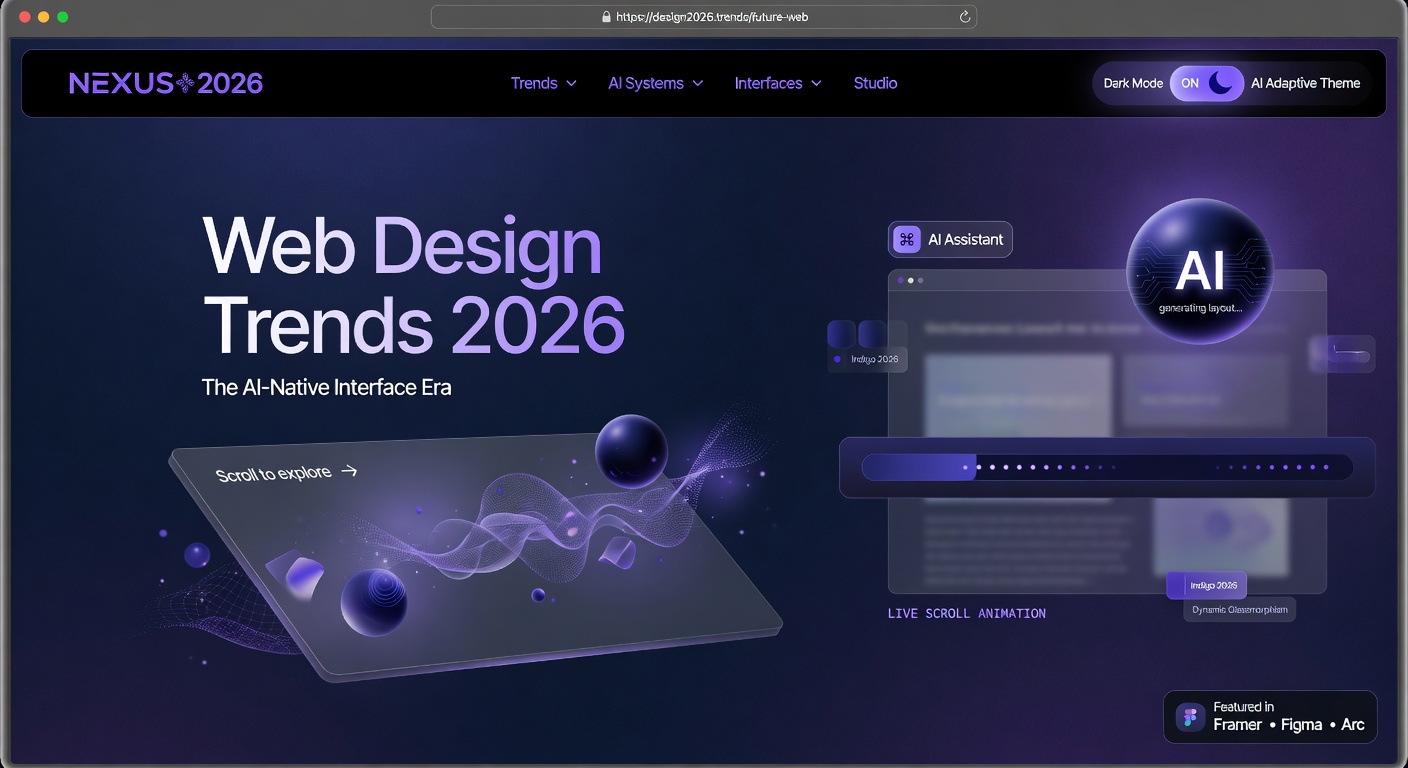
In today's digital world, a website is far more than a storefront — it has become a 24/7 salesperson, brand ambassador, and customer relationship manager. As of 2026, technology is evolving so rapidly that static and ordinary websites are quickly losing their competitive edge.
Why Should You Follow Web Design Trends?
Digital transformation is no longer optional — it is a necessity. According to Statista, global e-commerce volume is expected to exceed $8 trillion in 2026. Users are demanding faster, more personalized, and accessible experiences.
- Higher conversion rates: Modern designs can increase visitor-to-customer conversion rates by 30-50%.
- SEO advantage: Google directly evaluates user experience (Core Web Vitals) as a ranking factor.
- Brand perception: A professional, trend-aware site conveys trust and innovation.
- Competitive edge: If your competitors adopt these trends, you risk falling behind.
Ignoring these trends can mean losing potential customers to your competitors.
1. AI and Machine Learning Integrated Designs
Artificial intelligence is fundamentally changing web design. Static pages are giving way to dynamic experiences that adapt based on user behavior.
Key Applications
- AI-Powered Chatbots and Virtual Assistants: Beyond simple FAQs, bots that provide personalized recommendations using natural language processing.
- Automated Design Tools: AI tools that accelerate design processes (e.g., Figma AI integrations or custom GPT models).
- Personalized User Experience: Content, color schemes, or navigation change based on the visitor's location, device, and behavior.
Example: On a fashion brand's site, AI offers a virtual fitting room based on the user's body type.
Implementation Tips
- Start with ready-made AI tools (Dialogflow, ChatGPT integrations) for small businesses.
- Pay attention to data privacy (GDPR/KVKK compliance).
- Test with A/B testing to measure the real impact of AI.
2. Dark Mode and Accessibility-Focused Designs
Accessibility is no longer just a legal requirement but an ethical and business necessity. WCAG 2.2 standards are being enforced even more strictly in 2026.
- Default Dark Mode: Reduces eye strain and extends battery life. 70% of users prefer dark mode.
- Voice Navigation and ARIA Labels: Structures optimized for screen readers.
- High Contrast and Flexible Fonts: Designs that accommodate color blindness and different age groups.
Business Benefit: Accessible sites reach wider audiences and gain SEO points on Google. A restaurant site with dark mode + voice menu integration can increase its disabled user base by 25%.
3. Minimalism and Micro-Interactions
The "less is more" philosophy is peaking in 2026. Clean interfaces, fast loading, and focused calls-to-action (CTAs) are at the forefront.
Key Elements
- Micro-interactions: Animations on button clicks, hover effects, progress bars. They keep users engaged and make the experience enjoyable.
- 3D Elements and Neumorphism: Adding depth with subtle shadows and 3D models.
- Scroll Animations: Storytelling with parallax effects.
Example Project: IKEA Turkey redesign project which I had been a part of, we combined minimal design with micro-animations to increase the time users spent on product pages.
4. Progressive Web Apps (PWA) and Mobile-First Approach
In a world where mobile traffic accounts for over 60%, responsive design is no longer enough.
Why PWA?
- Web apps that behave like native applications (offline access, push notifications).
- Fast deployment without App Store approval.
- Lower development cost.
2026 Trends: AMP integration, Voice Search Optimization (structured data with schema.org), device-specific features (fingerprint, AR filters).
5. Sustainable Web Design (Green Web Design)
Environmental awareness is rising. Sustainable web design encompasses approaches that reduce carbon footprint.
How to Implement?
- Optimized code and images (less data transfer).
- Green hosting providers.
- Energy-efficient animations.
Advantages: Strengthens brand image, reduces costs, and attracts conscious consumers. Google also rewards sustainable sites.
The Intersection of SEO and Web Design
Web design and SEO are inseparable. In 2026, E-E-A-T (Experience, Expertise, Authoritativeness, Trustworthiness) principles are more critical than ever.
- Core Web Vitals Optimization: Perfect your LCP, FID, and CLS metrics.
- Semantic HTML and Structured Data: For rich snippets.
- Content and Design Harmony: Blog integrations, fast navigation.
At Mandalium, we make SEO a cornerstone of design in every project. The result: sustainable increases in organic traffic.
“In 2026, the winning websites will not just be beautiful — they will be smart, accessible, and sustainable.”
Considerations When Implementing Trends
- Budget-Friendly Start: Ready-made themes + custom AI integrations.
- Security: SSL, regular updates, DDoS protection.
- Testing Process: User testing, heat map tools (like Hotjar).
- Maintenance: Trends change; annual maintenance contracts are essential.
Edge cases: In highly niche sectors (health, law), legal compliance must take priority.
Conclusion: Build a Digital Asset Ready for the Future
2026 web design trends are not just about aesthetics; they are built on user-centric, intelligent, accessible, and sustainable experiences. Businesses that embrace these trends will stay ahead of their competitors and achieve long-term success.
At Mandalium, we closely follow these trends and adapt them to every project. Whether you need a new website or modernization of your existing site, we offer tailored solutions.
Ready to make your mark digitally with a professional website? Contact us today for a free discovery call.